A child's first bike ride should be simple. A small bike. A quiet road. A bit of sunshine. Two legs turning. And a smile.
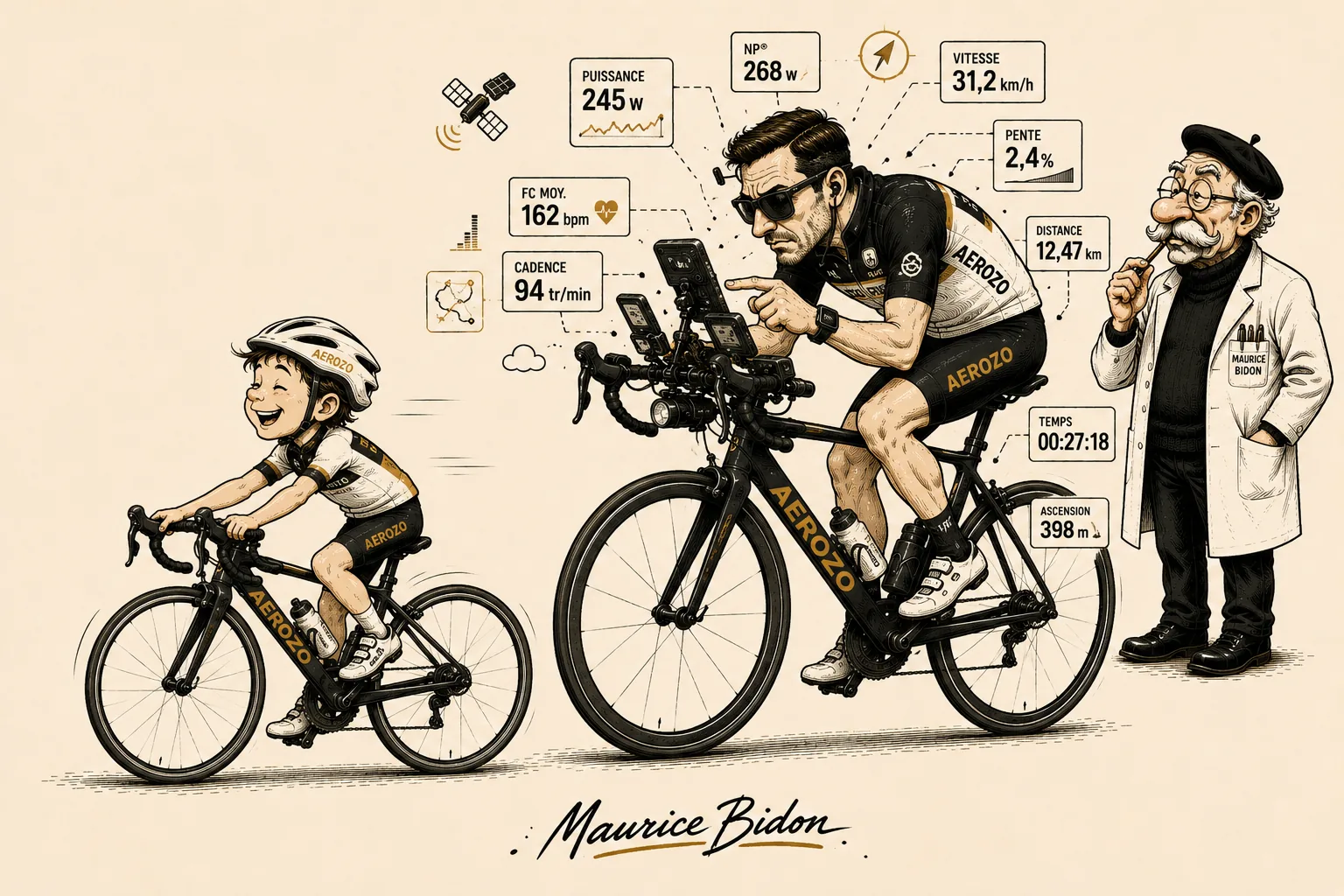
But some adults today manage an extraordinary feat: turning a 30-minute outing into a space mission.
The modern dad no longer rides. He analyses.
He knows the average cadence, the normalised power, the gradient percentage, the heart rate, the temperature, the wind, the elevation gain, the wattage, and probably the position of the GPS satellites.
The problem? While he's watching his data, the child just wanted to ride a bike.
The magnificent paradox
The little one rides ahead. Singing. Weaving slightly. Accelerating for no reason. Looking at the trees. Braking to watch a dog.
In short: living exactly what a child should experience on a bike.
Behind them, an adult gripping the cockpit, hunched over four screens, correcting their average speed, hunting for a Strava segment and wondering whether the ride is worth logging.
Maurice Bidon calls this: "cockpit syndrome".
The more screens on the handlebar, the less you look at the moment.
What children actually remember
Children don't remember the average speed, the NP, or the watts.
They remember the ice cream, the sprint to the signpost, the descent, the laughter, and the pleasure of riding together.
That's what builds a cyclist. Not the graphs.
The Official Maurice Bidon™ Scientific Protocol
- Ideal number of screens on the handlebar: fewer than the number of smiles during the ride.
- Primary objective: come home wanting to do it again.
- Ideal performance level: "Can we ride a bit more?"
Conclusion
The children's bike is not a miniature version of adult cycling. It's something else entirely.
Lighter. More spontaneous. More alive.
And honestly: often a great deal smarter.
Approximate professor of parental biomechanics and electronic overload since 1987.